Practice Range Prodigy, Tournament Ghost: Why Warmup Numbers Are Lying to Your Coaching Staff
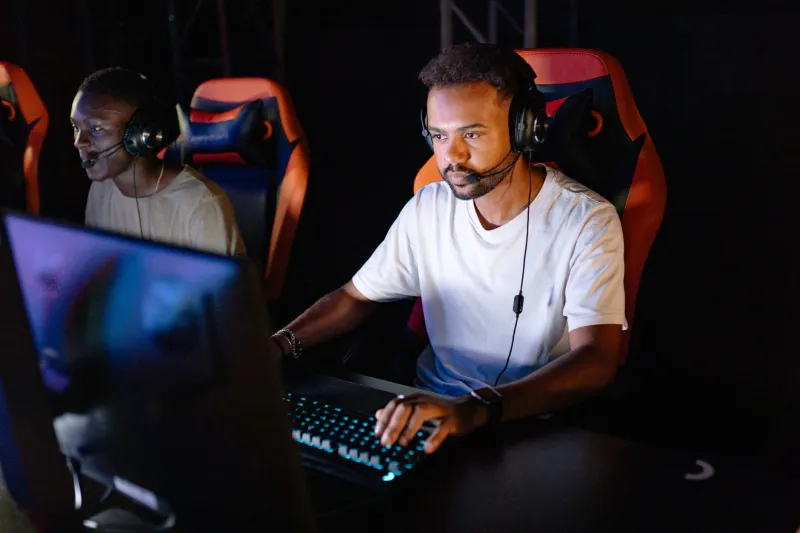
Every CS:GO fan has seen it. A player goes absolutely nuclear in pre-match warmup—headshots flying, reaction times borderline inhuman, movement crisp and confident. Then the tournament match starts, and that same player looks like they're playing through a fog. The kills dry up. The duels get lost. The coaching staff scratches their heads.
Here's the uncomfortable truth that tournament data keeps screaming at anyone willing to listen: warmup metrics and competitive fragging performance have a weaker relationship than most teams want to admit. And the organizations still building roster decisions around how someone performs in an aim trainer or a practice server are quietly setting themselves up to get bounced in the quarterfinals.
The Gap Between Controlled and Chaotic
Warmup environments are, by design, sterile. You're hitting stationary or predictably moving targets. There's no utility flying at your face. Nobody is shoulder-peeking from an angle you didn't anticipate. Your mental bandwidth is entirely dedicated to clicking heads, and that's exactly what makes those numbers misleading.
When you pull comparative data from CS:GO qualifiers versus main events—particularly from the last two years of Valve-sponsored tournaments—a consistent pattern emerges. Players who rank in the top percentile for raw aim metrics during structured warmup sessions frequently show meaningful stat drops in high-leverage rounds at LAN events. We're talking about scenarios where the buy is full, the map is contested, and both teams have complete utility loadouts.
The reason isn't nerves alone, though that's part of it. It's that peak aim in a vacuum and peak aim under competitive conditions are measuring fundamentally different cognitive tasks.
Utility Pressure Changes Everything
One of the most underappreciated factors in real match fragging is how utility usage reshapes every single duel. In warmup, you're tracking clean targets. In a tournament round on Inferno or Mirage, you might be taking a fight through a partial smoke, recovering from a flash that caught you half a second ago, or holding an angle while a Molotov is forcing your feet to move.
Analytics tracking from major qualifier brackets shows that players with elite raw aim scores but lower utility-awareness ratings—measured through things like flash-assisted kill rates and smoke-through engagement frequency—tend to underperform their warmup projections by a statistically significant margin when tournaments hit the business end of brackets.
What that tells us is simple: aim isn't one skill. It's a cluster of related but distinct abilities, and the practice range is really only testing one slice of that cluster. The rest only shows up when the chaos is real.
Positioning Rewrites the Duel Before It Starts
Here's another angle that warmup data completely ignores: positioning. A significant chunk of what looks like "fragging ability" in a tournament setting is actually the result of positioning decisions made five to ten seconds before the duel even happens.
When analysts dig into round-by-round data from top-tier North American and international teams, a recurring finding is that players with slightly lower raw aim scores but higher positioning efficiency ratings—measured by engagement distance consistency, angle advantage rate, and pre-aim accuracy on common peek spots—outperform their warmup-dominant counterparts in actual match KDRs.
In other words, a player who consistently puts themselves in favorable positions before the fight starts is going to win more duels than a player relying on superior raw mechanics to bail them out of bad spots. Warmup doesn't test positioning. It literally cannot. And yet positioning might be the single biggest variable separating a 1.15 rating player from a 0.95 rating player at a major.
What the Qualifier-to-Main-Event Data Actually Shows
Pull the numbers from recent Major qualifier stages compared to the main event group stage, and a few things stand out. First, players who show the highest volatility between qualifier performance and main event performance tend to be mechanical-first players—guys whose game relies heavily on winning raw aim duels rather than creating structural advantages through utility and positioning.
Second, the players who maintain the most consistent stats from qualifiers through deep main event runs are disproportionately players with high utility usage rates, above-average flash-assisted kill percentages, and consistent first-engagement positioning advantages. Their warmup scores? Often unremarkable. Their tournament floors? Remarkably stable.
That stability is the real currency in tournament CS:GO. A player who averages a 1.10 rating across six best-of-three series is more valuable than a player who goes 1.30 in two matches and 0.85 in the next three—regardless of what either of them looked like in warmup.
The Coaching Staff Problem
So why do teams keep leaning on warmup metrics? Part of it is availability bias. Warmup data is easy to collect, easy to quantify, and easy to present in a meeting. Pulling meaningful positioning efficiency data or utility-pressure duel stats requires more sophisticated tracking infrastructure that smaller organizations especially don't always have.
But part of it is also a psychological comfort thing. Watching your star player dominate a practice server feels like confirmation that they're ready. It's reassuring. The problem is that reassurance and predictive accuracy aren't the same thing, and in a tournament bracket where one bad series ends your run, you need predictive accuracy.
The coaching staffs that are genuinely ahead of the curve right now are the ones tracking things like how a player's duel win rate shifts when they've been flashed in the previous three seconds, or how their engagement accuracy changes on rounds where they've been forced off their initial position by utility. Those are tournament conditions. Warmup is not.
What Actually Predicts Clutch Performance
If warmup scores aren't the answer, what is? Based on the data patterns visible across recent tournament cycles, a few metrics do a much better job of forecasting who shows up when it matters:
Duel win rate under utility pressure — How often does a player win fights when they're operating in a compromised visual or positional state?
Rating consistency across buy round types — Does performance hold up equally on pistol rounds, eco rounds, and full buys, or does it spike and crash based on equipment?
Late-round duel conversion — How does a player's aim perform when they're the last person alive, or when the round is in its final fifteen seconds? Pressure changes mechanics in ways warmup will never simulate.
Positioning advantage rate — What percentage of their duels are taken from a pre-established angle advantage versus reactive peeking?
None of these show up in a practice range score. All of them show up in tournament data.
Stop Training for the Wrong Scoreboard
The warmup myth is persistent because it feels logical. Better aim scores should mean better fragging. But CS:GO at the competitive level isn't a controlled aim test—it's a dynamic, utility-driven, positioning-dependent environment where mechanical skill is necessary but nowhere near sufficient.
Teams that keep chasing practice range perfection while ignoring the contextual metrics that actually predict tournament survival are going to keep getting surprised when their warmup heroes go quiet on the big stage. The data has been telling this story for a while now. The question is which organizations are finally ready to listen.