Opening Shot Advantage: The First Blood Data Pro Teams Are Quietly Exploiting
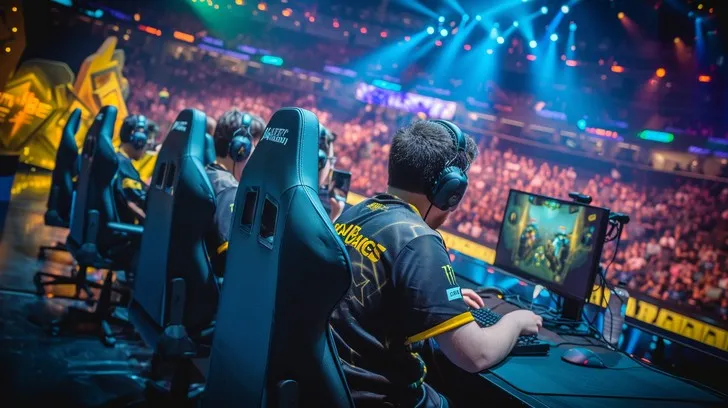
Photo: esports player aiming FPS game competitive gaming setup, via images.stockcake.com
There's a moment every CS:GO round where the math quietly shifts. It happens fast — sometimes in the first ten seconds — and most casual viewers blink right past it. But inside pro team analysts' spreadsheets, that moment has a name: the first blood. And the data around it is more powerful than most players realize.
At CSGO Stats, we've been digging into first blood conversion rates across the top 10 North American and European teams over the past competitive year, and what we found paints a pretty clear picture: the team that draws first blood wins the round at a significantly higher rate than the one that doesn't. But the how and where of that first kill? That's where things get genuinely interesting.
The Numbers Don't Lie: First Blood and Round Win Correlation
Across the top-tier competitive matches we tracked, teams that secured the opening kill went on to win that round roughly 68 to 72 percent of the time, depending on the map. That's not a small edge — in a sport where every percentage point matters, flipping a coin that lands heads two out of every three times is enormous.
But here's the wrinkle: that win rate isn't uniform. It spikes dramatically in eco and force-buy rounds. When a fully-equipped CT side picks up the first blood against a half-buy T side, the round win probability jumps closer to 85 percent. Pro teams have internalized this, and it's reshaping how they approach anti-eco setups entirely.
Rather than defaulting to passive holds, elite squads are increasingly structuring their positioning around forcing early engagements in known high-traffic corridors — essentially gambling a little map control to fish for that opening kill before the round's economic story gets complicated.
Position Matters as Much as the Kill Itself
Not all first bloods are created equal. Our positional breakdown revealed some pretty stark differences in where opening kills happen and how much they're actually worth in terms of round control.
Mid control kills consistently ranked as the highest-value opening frags across Mirage, Inferno, and Overpass. A first blood at mid doesn't just remove a player — it collapses an entire rotation pathway, forcing the surviving team to rethink their split options on the fly. Teams like Cloud9 and NaVi have historically prioritized mid presence specifically because of this cascading effect.
Aggressive off-angle picks — the kind of play where a player pre-aims a non-standard position — generated first bloods at a higher frequency than passive holds, but with a notable trade-off: they also produced the most first-blood-but-round-loss scenarios. In other words, getting the opening kill from a risky position often left the fragger out of position or isolated, neutralizing the numerical advantage almost immediately.
The sweet spot, based on the data, is what analysts sometimes call the controlled aggressive hold: a position that's slightly forward of default but still supported by a teammate. These setups produced first bloods that converted into round wins at the highest combined rate across all maps.
NA vs. EU: A Tale of Two Philosophies
One of the more fascinating splits in our data came down to regional tendencies. North American teams, on average, attempted more aggressive early peeks to secure first blood — a style that's deeply rooted in the NA pug culture that most pros grew up in. The upside is unpredictability. The downside is inconsistency: NA teams showed wider variance in their first-blood-to-round-win conversion, meaning the strategy worked brilliantly sometimes and fell apart completely in others.
European squads, by contrast, leaned into structured utility-into-peek sequences. Think a well-timed smoke followed by a flash, opening up a controlled duel rather than a raw aim battle. EU teams' first blood conversion rates were slightly lower in terms of raw frequency, but their round win rate after securing first blood was measurably higher — suggesting that the setup around the kill matters as much as the kill itself.
For US-based amateur players watching these tendencies, there's a practical lesson buried here: you don't necessarily need to out-aim your opponent to win the opening exchange. You need to out-position them.
What This Means for Your Ranked Games
Okay, so pro teams have analysts crunching this stuff full time. What does any of this actually mean for someone grinding ranked in NA servers?
A few actionable takeaways from the data:
1. Respect the first blood on eco rounds. If you're on the CT side with a full buy and the Ts are running pistols and kevlar, your team's priority should be trading zero opening kills. Play patient, play supported. The math is already in your favor — don't give it away with an unnecessary aggressive peek.
2. Identify your map's highest-value opening positions. On whatever maps you're queuing, spend ten minutes in a practice server identifying the two or three spots where an early kill would have the most rotational impact. Those are your first-blood targets. Build your early-round movement around contesting or denying those positions.
3. Don't take first blood alone. The data on isolated first bloods is pretty humbling — even when you win the duel, being out of position after the kill frequently costs your team the round anyway. The pro approach is almost always to create the duel with support nearby, not to hero-peek solo.
4. Track your own first blood rate. Seriously — if you're not already logging your stats on a platform like CSGO Stats, you're flying blind. Your personal first blood percentage, and more importantly your first-blood-to-round-win conversion, will tell you a lot about whether your aggressive tendencies are actually working or just feeling like they are.
The Bigger Picture
First blood statistics represent one of those rare analytics categories that bridges the gap between high-level pro play and everyday ranked games. The fundamental principle is the same at every level: numerical advantage wins rounds, and the opening kill is the fastest way to create that advantage.
Pro teams have simply gotten very, very good at engineering the conditions for that first kill rather than hoping it happens organically. The positions they choose, the utility they throw, the timing of their peeks — all of it is increasingly calibrated around maximizing the probability of that opening exchange going their way.
The gap between pro play and amateur play isn't just mechanical skill. A big chunk of it is this kind of intentional, data-informed decision-making. And now that you've seen the numbers, there's no reason you can't start applying the same logic to your own rounds.