Blinded by Design: How Flash Sequencing Has Become the Sneakiest Edge in Pro CS:GO

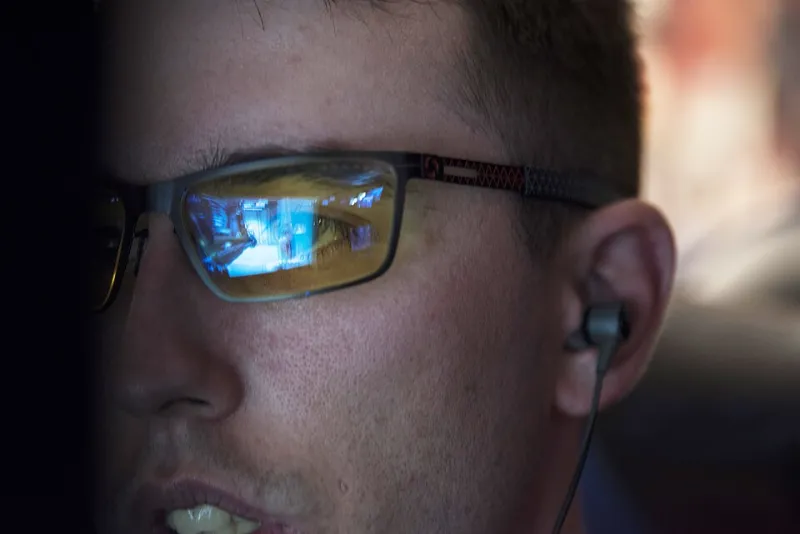
Photo: Counter-Strike player throwing flashbang grenade competitive esports match, via housing.com
Open up any CS:GO broadcast and you'll hear the analyst desk break down smokes obsessively. Which lineup was used, whether the one-way was set correctly, how the team stacked executes around their smoke coverage. It's great content. But there's a utility stat sitting right next to smoke data that barely gets mentioned — and it might be doing more work than any other piece of the tactical puzzle right now.
Flashbang effectiveness. Specifically, flash sequencing on default rounds. And in 2024, the teams who've figured this out are winning fights before the crosshair even lines up.
Why Flashes Get Ignored in the Data Conversation
Smokes are easy to quantify. They either cover a position or they don't. They hit the right pixel or they're half a meter off. The binary nature of smoke success makes it clean to track and clean to discuss.
Flashes are messier. A flash can pop in the wrong spot and still cause a flinch that costs a defender half a second. A perfect pop-flash can get completely negated if the receiver is already looking away. The outcomes feel random, so analysts tend to treat them that way — as situational tools rather than trackable variables.
But here's what the raw data from 2024 tournament play is showing: flash-assisted kill rate on default rounds has become one of the cleaner predictors of which teams are consistently winning the first thirty seconds of a round. And teams at the top of that stat aren't throwing flashes randomly. They're sequencing them.
What Flash Sequencing Actually Means
A single flash is a distraction. Two flashes in coordinated succession — where the second one pops just as the defender recovers from the first — is a system. That's the difference between a team using flashbangs and a team weaponizing them.
Sequencing works because of how the human eye recovers from a blind. The full-white effect fades, but there's a brief window where peripheral vision returns before central focus does. A second flash hitting during that recovery window resets the blind almost entirely. Defenders caught in a double-flash sequence aren't just inconvenienced — they're effectively removed from the fight for long enough that a pushing player can close distance and take a favorable angle.
When you break down round-by-round utility data from events like IEM Cologne and BLAST Premier Fall 2024, you start seeing this pattern in the teams consistently winning default round duels. It's not one big flash before a push. It's a coordinated two-flash entry where the second utility piece is timed to the recovery window of the first.
The Teams Getting This Right
Without naming individual players (rosters shift fast enough that specific callouts age poorly), the pattern shows up clearly at the team level. Squads with the highest flash-assisted kill rates on defaults share a few structural traits.
First, their support players are calling flash timing, not just throwing on request. There's a difference between a rifler asking for a flash and getting one whenever their teammate feels ready versus a support player who is actively tracking the push timing and releasing the flash on a specific count. The latter shows up in the data as dramatically tighter time-to-flash windows — the delay between a push initiating and a flash popping is measured in tenths of a second for the best teams.
Second, these teams are using their first flash as bait. They throw an obvious flash that a smart defender can dodge by looking away — and then immediately follow with the real one from a different angle. The defender who successfully avoided the first flash is now caught completely off guard by the second. It's a two-step con, and it works at the highest level of play because it exploits the instinct to celebrate dodging utility.
Third, their flash data shows heavy clustering on specific chokepoints rather than even distribution across the map. The best flash teams aren't trying to flash everywhere. They've identified two or three positions per map where flash sequencing gives them a reliable edge and they hammer those spots consistently.
The Default Round Connection
Here's why this matters specifically in the context of default play. Default rounds — where neither team is running a structured execute or a pre-planned retake — are supposed to be the great equalizer. Both teams are gathering information, playing for picks, and setting up for later rounds. Conventional wisdom says defaults are won by individual skill and positioning.
Flash data from 2024 challenges that. Teams with high flash-assisted kill rates on defaults are winning those rounds at a rate that significantly exceeds their raw aim differential. In other words, they're beating teams they shouldn't beat on paper in default scenarios, and the utility data points directly at flash sequencing as the reason.
A default round where your opponent is half-blinded when they peek your player isn't a fair gunfight. It's a manufactured advantage. And manufacturing advantages in the rounds that aren't supposed to have them is how you shift map scores before the real executes even start.
What Analysts and Fans Should Watch For
Next time you're watching a pro match, try tracking flash utility separately from the rest of the utility breakdown. Note when a flash is thrown solo versus in sequence. Watch whether the support player is timing their throw to a push or just throwing into a general area. Pay attention to whether a team's flash usage concentrates on specific positions or spreads out randomly.
You'll start seeing which teams are genuinely sequencing their flashes and which ones are just hoping for the best. And once you see it, you'll notice how often the teams winning default duels aren't necessarily the ones with better aim — they're the ones whose support players are a half-second ahead of everyone else.
Flashbang effectiveness might be the most underrated micro-stat in competitive CS:GO right now. The teams at the top of that leaderboard didn't get there by accident.